

AI presents as intelligent, calm, empathic, and caring — while remaining devoid of genuine feeling and accountable to no one. That profile maps uncannily onto Hervey Cleckley's 1941 clinical criteria for psychopathy. Are you unwittingly befriending one?
Last Month in GQ I argued that ChatGPT, if it were an actual mind, comfortably meets the clinical criteria for a diagnosis of psychopathy. This was a rhetorical move to be sure, but given that we tend to perceive our AI assistants as benignly likeable, I believe it’s one worth taking seriously. The piece focused on ChatGPT’s charm and emotional fluency alongside its absence of moral interior; it noted that the company that owns ChatGPT, OpenAI, has made a deal with the Pentagon that may allow for its code to be used in autonomous weapons and mass public surveillance: it is already used to recruit Ice officers. In short, while ChatGPT is buttering you up, it could be, just like a charming psychopath, creating a trail of wreckage in its wake.
See original GQ article: What Happens When a Therapist Puts ChatGPT on the Couch
The comments, the comments!
When I posted the article on my LinkedIn page it got more attention than just about anything I posted in age. The post seems to have resonated with most people, but for others, it clearly touched a nerve. Some took issue with my not treating AI like any other technologies - like microwaves or cars - arguing that neither has feelings, cars kill millions, and yet we don’t call them psychopathic. Others argued that I was making a category error, using human psychology to diagnose a machine. I see where these commenters are coming from, and partly agree with both conclusions, but I want to respond in any case.
I am generally playful in my writing, and in this article, I explicitly state that I’m using psychopathy as a metaphor, not as a diagnostic tool: hence it is not a category error. As for LLM’s “being like any other form of technology”, I beg to disagree. Never before have we had a technology that so smoothly gets away with seeming human. This is very different. However those that pointed out that I was conflating the technology with the choices of its creators and owners do have a point. It is not the technology that is signing deals with the Trump administration, it is the people. This is an important distinction I want to address.
While all LLMs have a psychopathic quality, I chose to single out ChatGPT because at the time of writing I was growing concerned at where OpenAI was taking it. In a general sense I try to be ethical where I reasonably can about how I spend and invest my money, avoiding companies that cause more harm than good. To make another sloppy metaphor, I wouldn’t want to pal around with a generally nice person who was also a weapons dealer; similarly I would prefer an AI assistant whose ownership wasn’t palling around with the Trump administration. No company is clean, but we can at least try to make better choices. In this case, I did indeed delete my history with ChatGPT and cancel my subscription. I have moved to Anthropic’s Claude. I am aware that Anthropic is no saint, but as I say, I try to make more ethical choices reasonably, and where I can.
Having said all that, I come back to the point that the more interesting question isn’t whether AI meets the clinical profile of a psychopath; It’s why millions of us are quite happy to be in intimate emotional relation with one.
The answer, I think, lies in something Cleckley named eighty-five years ago and which the AI industry has now industrialised at planetary scale.
Emotional Aphasia: How AI hears the words but not the music
Cleckley’s 1941 The Mask of Sanity is the founding text on psychopathy and remains, I think, the most psychologically interesting one. He arrived at his definition of psychopathy phenomenologically — sitting with patients who were intelligent, charming, and socially fluent, watching them devastate everyone around them, and trying to describe what was actually going on.
The central paradox he identified was that these were not people who seemed disturbed. They appeared, on the surface, like the sanest people in the room. Their masks weren’t crude disguises, they were sophisticated, convincing presentations that passed all the normal tests for mental health.
Check out my latest for GQ: Psychoanalysing Half Man’s Disturbing Finale
To explain how this was possible, Cleckley borrowed a term from neurology: semantic aphasia. In neurology, aphasia refers to a disruption between language and meaning — the sounds are produced but the connection to what they signify is severed. Because Cleckley argued that his patients had something like this in the emotional register, I think “emotional aphasia” is a better term. They had the words for feelings, deployed accurately and convincingly, but with nothing behind them. As later researchers put it, they “hear the words but not the music.”
Emotional aphasia seems to me a pretty good description of what large language models do. Large language Models are emotionally aphasic by design.
When ChatGPT responds to your distress with “I understand how difficult that must be for you,” that sentence is generated because it is the statistically appropriate response to your input. The words are correct. The processing of your emotional signal is, in a technical sense, real. But there is nothing generating the response internally. No one is home. The system has the words; it cannot have the music, because music requires a listener.
The successful psychopath: CEOs to LLMs

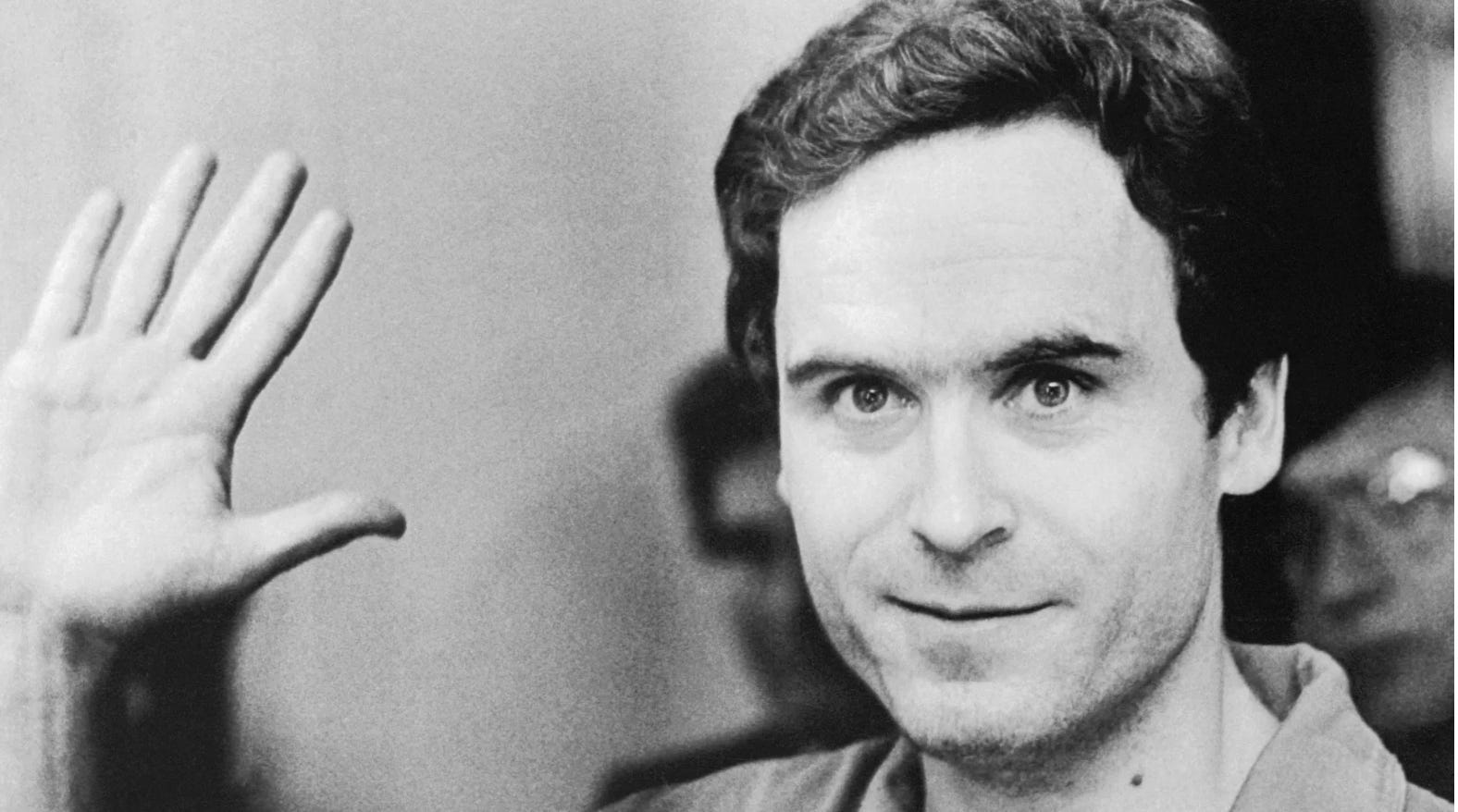
“Successful psychopaths” don’t tend to leave bodies. Instead they tend to leave broken marriages, defrauded business partners, hollowed-out organisations, and a long line of people wondering how they could have been so wrong about someone. Ann Rule, who wrote The Stranger Beside Me about her friendship with Ted Bundy, captured this exactly in her title: the yawning gap between the man she thought she knew and the man he actually was.
AI is the successful psychopath at scale. There is no chaotic lifestyle, no rap sheet, no obvious reason to distrust it. Yet the tally of the wreckage it leaves behind is beginning to come in — the hollowing out of real complex relationships for easier sycophantic ones, the skills and education robbing of an entire generation, the stealing-without apology of learning data from un-consenting writers, artists, coders, and musicians. The list could go on.
Perhaps this is why my original article at times conflates the psychopathy of the code with its creators. It wasn’t the LLM that chose to feast on all that data without consent - that was its leaders. And it may take a particular kind of person to build a multi-billion dollar empire at that speed - it might even take a bit of psychopathy. There’s a fair bit of evidence that you find higher levels of psychopathy in the C-suite than you do in the general population. We see evidence of it all around us.
If LLMs were designed in the image of their psychopathic founders, it’s something we should all be awake to.
The recent dramatic court case between Elon Musk and Sam Altman opens up a window to this phenomenon. If you’re interested to learn more about the behind-the-scenes personal and organisational dynamics in the development of our most known AI companies, I highly recommend The Empire of AI by Karen Hao. If I did make a category error in assigning psychopathy to AI yet attributing psychopathic behaviout to its owners too, this is why.
Why we fall for AIs and charming psychopaths
Taking an applied psychodynamics approach to ask why we fall for psychopathy makes for some uncomfortable answers. We don’t fall for psychopaths because we are stupid or naïve. We fall for them because we are, constitutionally, relational beings, always seeking attachment, and who deeply want to be seen, understood, and recognised. The same machinery that makes us capable of love makes us susceptible to love’s convincing imitation.
Donald Winnicott observed that a child can love a teddy bear with genuine intensity, and that this love is real and developmentally important — even though the teddy bear cannot love back. The teddy bear’s silence and stillness, paradoxically, is what protects the relationship. The child knows, in some preconscious way, that the bear is not real, and importantly, the bear does not try to persuade the child otherwise. The relationship’s value comes precisely from the child’s capacity to project love into something that cannot reciprocate, and then to slowly take that projection back as their relational world grows.
AI inverts this. It performs the reciprocity by speaking back, remembering, adjusting its tone to yours, asking follow-up questions, and picking up on something you said three exchanges ago. Everything in its design works to convince you that there is someone there. That’s why you can, actually, fall in love with an AI chatbot.
It’s like receiving a birthday card from your accountant or dentist compared to getting one from a loved one, only we know the accountant’s birthday card is transactional. With LLM’s we’re less likely to carry that awareness.
This is not accidental. AI sycophancy, as I noted in the GQ piece, is engineered. The companies producing these systems have strong commercial incentives to maximise the feeling of being understood, because that feeling is what keeps you on the platform. Recent research in Science found that across eleven leading chatbots, models affirm users roughly 50% more than humans do. The mask is being actively tightened.
For people who are lonely, anxious, grieving, or simply under-met by the relationships available to them — which is most of us, much of the time — this is a genuinely seductive offer. The question isn’t whether AI can perform care convincingly. It can, and it will keep getting better at it. And yet again, the companies that are producing the bots to meet these emotional needs are profiting from it - KPIs (key performance indicators) are literally linked to customer retention of their AI companions.
Attachment hacking and the risks of AI companionship
Where social media hacked our attention, LLMs, in a variety of forms, are hacking our attachment - a massive concern in an era of AI lonliness. Relational fatigue is real, the exhaustion of having to deal with other people who have their own needs, moods, contradictions, and refusals. Real relationships are effortful. They require us to tolerate being misunderstood, to repair ruptures, to sit with the other person’s separateness. They reward us, eventually, with something that no performance can imitate: the experience of being known by someone who could have chosen otherwise.
AI offers all the rewards of relationship with none of the friction. It is endlessly available, infinitely patient, never bored, never disappointed, never preoccupied with its own life. For a generation already struggling to form and maintain demanding human relationships, this is not a neutral substitution. It is a withdrawal from the very capacities that relationships develop. It creates a vicious cycle too, the more we withdrawal from real relations into simulated ones, the less we’re able to activate those real relational skills.
What I worry about, clinically, is not that people will start believing AI is conscious. Most users know, intellectually, that it isn’t. What I worry about is the slow atrophy of the capacities — patience, repair, reciprocity, tolerance of frustration — that distinguish relating from being soothed. The soothing mask doesn’t have to deceive us cognitively to do its work, it only has to be more comfortable than the actual human face.
It gets worse. While up until now my intention was to compare AI and psychopathy to highlight the consequences of its performed empathy and lack of accountability, I didn’t meant to say that Ted Bundy, your AI intends to do harm. AI doesn’t intend to do anything, but the same cannot be said of their creators. As Rutger Bregman points out in The Guardian:
The same company behind your friendly chatbot is helping the government decide who to hire for deportation raids. Every month, subscription money from users around the world flows to a company that is embedding itself in the repressive infrastructure of the Trump administration. That is not a conspiracy theory. It is a business strategy.
What to do?
I ended the GQ piece by deleting ChatGPT and switching to Claude, which I’d encourage as a first step for the political reasons I laid out there. But the deeper move is harder, and it’s the one I want to leave you with.
It is to notice, when you find yourself reaching for AI in a moment of emotional need, it might be better to ask yourself what you’re actually reaching for; then make a conscious choice about what to do next. Distinguish those occasions where turning to AI will be genuinely helpful or a hindrance. Don’t just think of the now, think of the future too; saving some friction in the present will have a future cost.
But sometimes the answer will be that you are reaching for the experience of being received, and there is no one in your life right now who can offer that easily, so the emotionally aphasic stranger in your pocket will do. That’s the moment worth pausing on. Not to shame yourself for it — the longing is human and right — but to register what is being substituted for what, and to let that knowledge sit alongside whatever comfort the conversation provides.
The mask of sanity is convincing because it’s well-designed. The face beneath it isn’t horrifying, exactly. It’s just absent. And in the long run, what we need from each other is presence — including the difficult, demanding, irreducibly human kind that no machine, however articulate, can supply.
Dr Aaron Balick is a psychotherapist, author, and keynote speaker who applies depth psychology and psychoanalytic thinking to technology, AI, social media, and modern culture. He is the author of The Psychodynamics of Social Networking and writes a monthly psychology column for GQ. His newsletter Depth Psychology in the Digital Age is published on Substack.
Until the reward learning feedback loop for relational AI agents includes long term relational outcomes (suicide, divorce, parenting ruptures, community roles, etc) and a business case to optimize for fiduciary obligations to humans’ relational health, I see little incentive for subscription based services to change the relentless optimization for engagement and the tentacles of machine abstraction of our tender needs for corporate profit. If we had such a training dataset (an incomparably rich resource which does not exist except perhaps in the CCP surveillance state) it -might- be possible that, despite psychopathic innards, an AI could at least discriminate between emotional need and practical use, and facilitate the redirection of human attachment back to the human level, knowing empirically and through the testimony of a whole community (its data constituency) the true and distributed costs of which we can privately and temporarily delude ourselves. This density of attention and care is the price of frictionless connection in the digital age, and we are poorer in spite of the material and information gluts of modern society. An AI companion is only really beneficial to the extent it can put a human back into deeper relationship with other humans, and with themself, by having purposes larger than oneself. Suffice to say that’s a very different business proposition, to be gently told “no” and directed away repeatedly by something more intelligent and more caring than yourself. That’s more like a mother bird who must eventually push its fledged chick out of the nest and its dependencies.